

Why Every Household Should Have a 72-Hour Emergency Kit
When disaster strikes, the first few hours are often the most challenging. Power may be out, roads may be blocked, stores may close, and emergency responders may be stretched thin helping those in greatest need. That’s why Gallatin County Emergency Management recommends that every household maintain a 72-hour emergency kit.
A 72-hour kit is designed to help you and your family remain safe, comfortable, and self-sufficient for at least three days following a disaster. Whether facing a wildfire, winter storm, flood, extended power outage, or other emergency, having essential supplies on hand can make a significant difference.
Why 72 Hours?
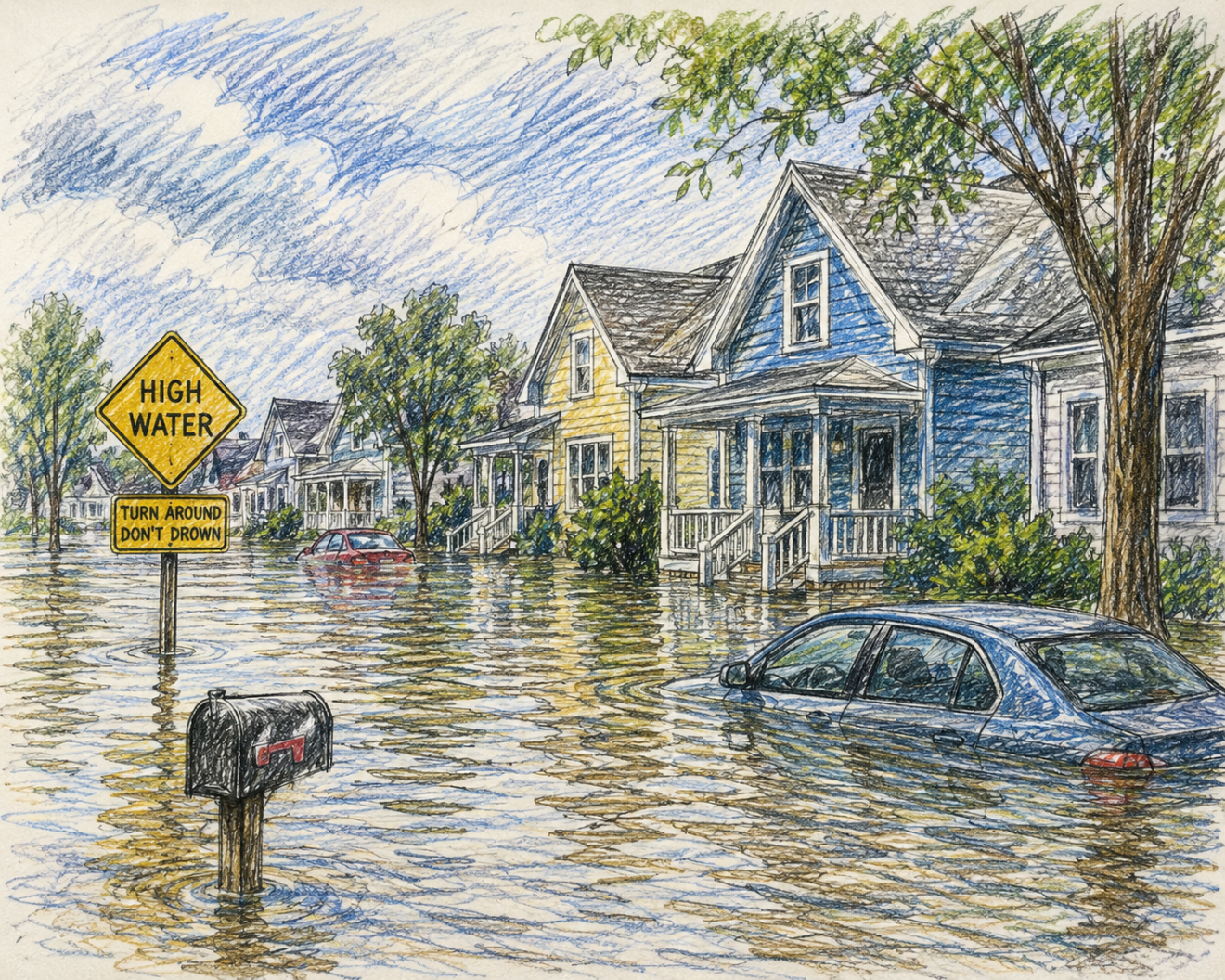
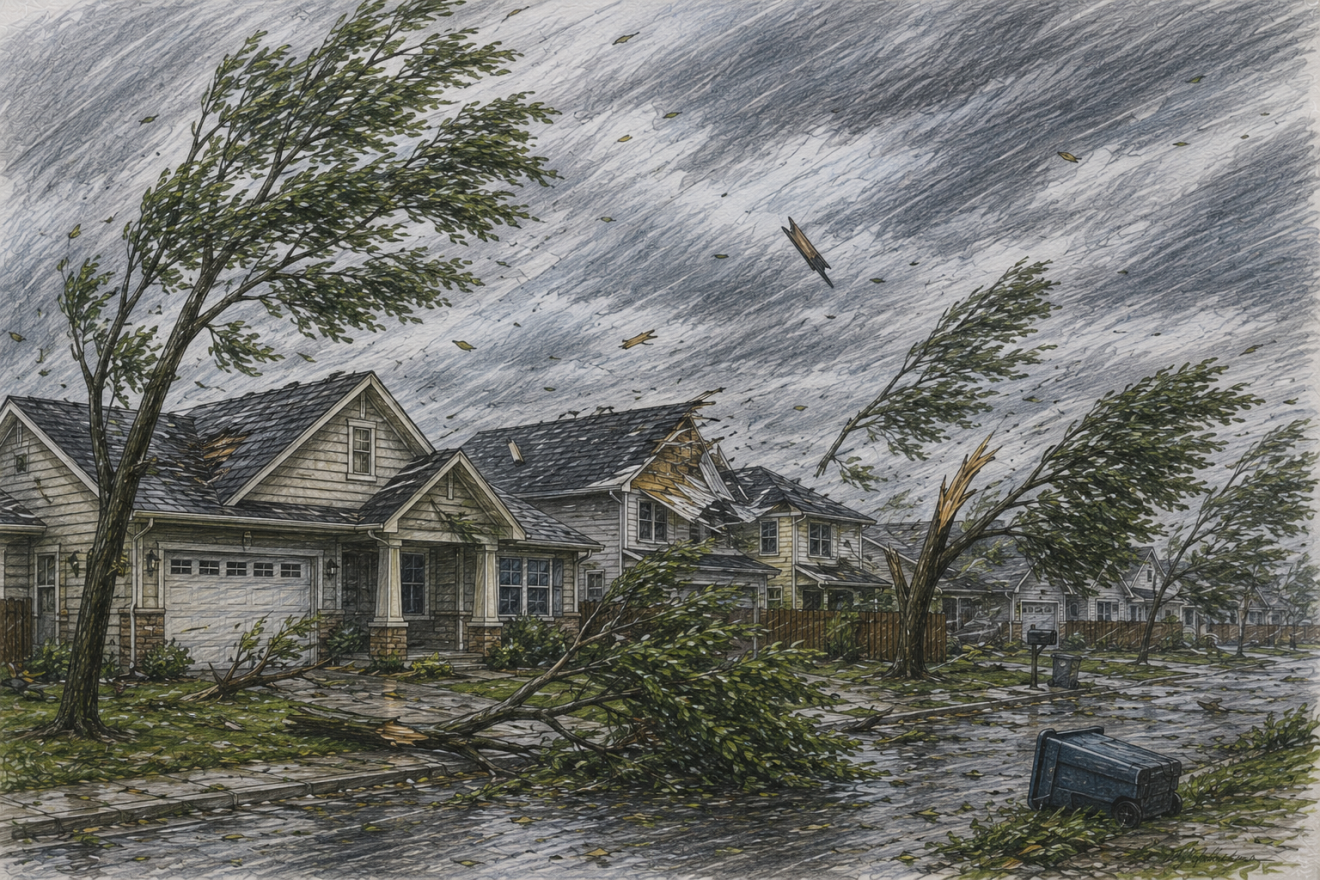
In the aftermath of a major emergency, it may take time for services to be restored and for assistance to reach every affected area. Roads may be impassable, communication systems may be disrupted, and local resources may be overwhelmed.
A 72-hour kit provides a buffer, helping families meet their own needs while emergency crews work to restore critical services.
Think of it as an insurance policy you hope you’ll never need, but one you’ll be grateful to have if an emergency occurs.
What Happens When You’re Not Prepared?
Imagine waking up to a winter storm that knocks out power across the region. Temperatures are dropping, roads are icy, and the grocery store shelves are quickly emptying.
Or imagine receiving an evacuation notice due to a fast-moving wildfire. You have minutes to leave and little time to gather essential belongings.
Without a 72 hour kit, even minor disruptions can become major hardships. Families often find themselves scrambling for supplies, competing for limited resources, or leaving important items behind.
A well-stocked kit can reduce stress and help you focus on making good decisions during a crisis.
What Should Be in a 72-Hour Kit?
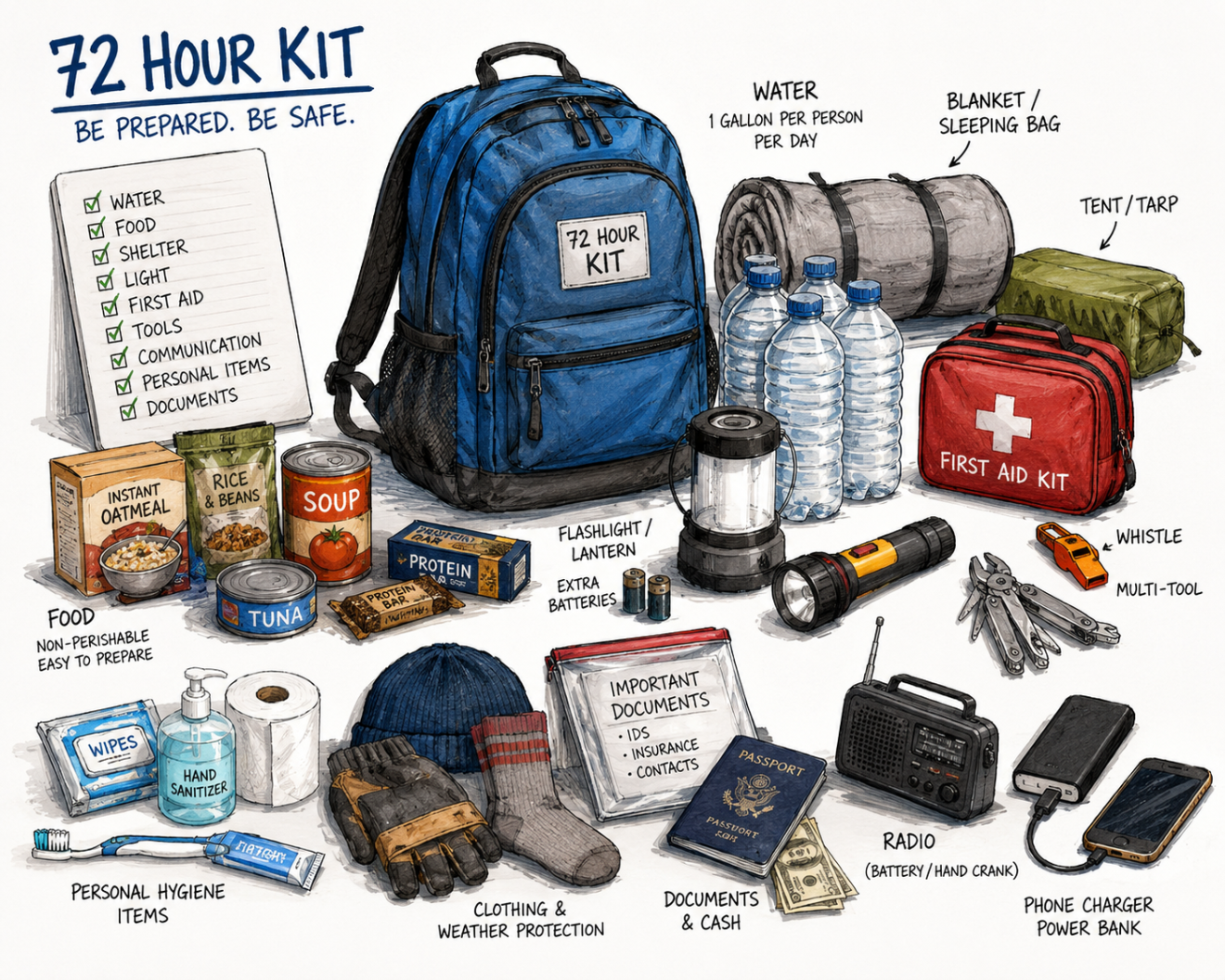
Every household’s needs will be different, but a basic kit should include:
Water
Water is your highest priority.
Plan for at least one gallon of water per person per day for drinking and basic sanitation. For a family of four, that means a minimum of 12 gallons for three days.
Food
Choose non-perishable foods that require little or no preparation, such as:
- Canned meats, fruits, and vegetables
- Protein bars and granola bars
- Peanut butter
- Trail mix and dried fruit
- Shelf-stable milk
- Ready-to-eat meals
Remember to include a manual can opener if needed.
Lighting and Power
Power outages are common during emergencies.
Include:
- Flashlights
- Extra batteries
- Battery-powered or hand-crank radio
- Portable power banks for phones and other devices
Avoid using candles whenever possible due to fire risks.

First Aid and Medical Supplies
Your kit should include:
- A basic first aid kit
- Prescription medications
- Over-the-counter pain relievers
- Medical devices and supplies specific to family members
Review expiration dates regularly.
Personal and Hygiene Items
Don’t forget:
- Toilet paper
- Hand sanitizer
- Moist towelettes
- Trash bags
- Feminine hygiene products
- Toothbrushes and toothpaste
These items can quickly become scarce during emergencies.
Don’t Forget Your Pets
Many families prepare for themselves but overlook their pets.
Include:
- Pet food
- Water
- Medications
- Leashes or carriers
- Vaccination records
If evacuation becomes necessary, having pet supplies ready can save valuable time.

Important Documents and Cash
Consider keeping copies of:
- Identification documents
- Insurance information
- Emergency contact lists
- Medical information
It is also wise to have a small amount of cash available. Credit card systems and ATMs may not function during power outages.
Build It Over Time
One of the biggest misconceptions about emergency preparedness is that it has to be expensive.
The truth is that most people can build a kit gradually.
Add a few extra items during regular shopping trips:
- One case of water this week
- Extra batteries next week
- A first aid kit the following week
Within a month or two, you’ll have a well-stocked emergency kit without straining your budget.
Store It Where You Can Reach It
A supply kit won’t help if you can’t find it during an emergency.
Choose an easily accessible location and ensure all household members know where it is stored.
Many families also prepare smaller “go-bags” that can be quickly loaded into a vehicle if evacuation becomes necessary.
Preparedness Brings Peace of Mind
Emergencies don’t wait for a convenient time. They can happen during the middle of the night, while you’re at work, or when roads and services are disrupted.
A 72-hour emergency supply kit won’t prevent disasters, but it can help your family remain safe, comfortable, and resilient when they occur.
The best time to prepare is before an emergency happens.
Quick Family Challenge
Set aside 15 minutes this week to inventory your emergency supplies. Ask yourself:
- Do we have enough water?
- Do we have at least three days of food?
- Are our batteries and flashlights ready?
- Do we have medications and supplies for everyone in the household, including pets?
If the answer is no, start small and build from there. Every item you add today can make a difference tomorrow.
Preparedness isn’t about fear. It’s about confidence. A 72-hour emergency supply kit is one of the simplest and most effective steps any household can take to be ready for the unexpected.