
Media Release from PPL Montana

Contact: David Hoffman, 406-431-6783


ENNIS, Mont. (Sept. 3, 2010) - PPL Montana will reopen the road that provides access to its Madison Dam and public recreation areas immediately downstream in the Bear Trap Canyon for the Labor Day weekend.

"Safety of the public and employees continues to be the top priority as we move forward with plans to repair Madison Dam,? said David Hoffman, director of External Affairs for PPL Montana. ?In consultation with the Federal Energy Regulatory Commission, state and federal regulatory agencies, geologists and other experts, PPL Montana has determined that conditions are safe for public use of the road, and that?s good news for the Labor Day weekend."

Equipment atop the west side of the dam was damaged by a falling boulder from the wall of Bear Trap Canyon early Monday (8/30).

The road will be opened at 7 a.m. Saturday (9/4) and remain open until sunset on Monday (9/6). The road will remain closed on weekdays to allow construction equipment to access the dam. It may reopen on weekends after Labor Day, depending on the status of the work being done at the dam.

Hoffman said PPL Montana is sensitive to the importance of the fisheries, angling and boating on this popular section of the Madison River, and to the local economy.

"We're pleased that we can open the road for the holiday weekend," Hoffman said. "We ask the public to be mindful, however, that that road will be closed during the week so we can bring equipment to the dam. We plan to post signs by the Trail Creek trailhead with information about the status of the road."

Meanwhile, PPL Montana will complete a 5-foot drawdown of Ennis Lake by Friday night as the first step in the company?s plans to remove the boulder and repair the damaged equipment on the dam. To reduce pressure on the dam and the boulder, PPL Montana began to draw down Ennis Lake behind the dam on Monday evening.

The current flow rate of 3,300 cubic feet per second should limit effects on fishing and recreation on the lower Madison River, but the drawdown will affect boat docks and public launch sites on Ennis Lake. Flows will be reduced even further over the weekend ? to near 1,400 cubic feet per second ? once the drawdown is complete.

"Working with geologists and other experts, we?ve also determined that another large rock above the dam is anchored to the canyon wall,? Hoffman said. ?That will allow us safe access to make repairs.?"

Damaged equipment on the dam includes three spill gates, walkways and wooden flashboards that sit atop the dam to raise the level of water it is able to hold back.

PPL Montana is coordinating its efforts at Madison Dam with regulatory agencies and law enforcement officials from the state and local level up to FERC, which is responsible for oversight of hydroelectric facilities.

Madison Dam is a four-unit hydroelectric plant on the Madison River at the head of Bear Trap Canyon about 10 miles north of Ennis. The units have a total generating capacity of 9 megawatts. Madison Dam is 257 feet long and 35 feet high.

PPL has 500 employees in Montana who generate and sell electricity. PPL Montana operates coal-fired power plants at Colstrip and Billings, as well as 11 hydroelectric power plants along Rosebud Creek and the Missouri, Madison, Clark Fork and Flathead rivers. It has a combined generating capacity of about 1,200 megawatts and has offices in Billings, Butte and Helena. PPL EnergyPlus operates a trading floor in Butte that markets and sells power in the wholesale and retail energy market. PPL Montana and PPL EnergyPlus are subsidiaries of PPL Corporation (NYSE: PPL). More information about PPL Montana is available at http://www.pplmontana.com/.

# # #

Weather Service Report on West Yellowstone Wind Event

Overview

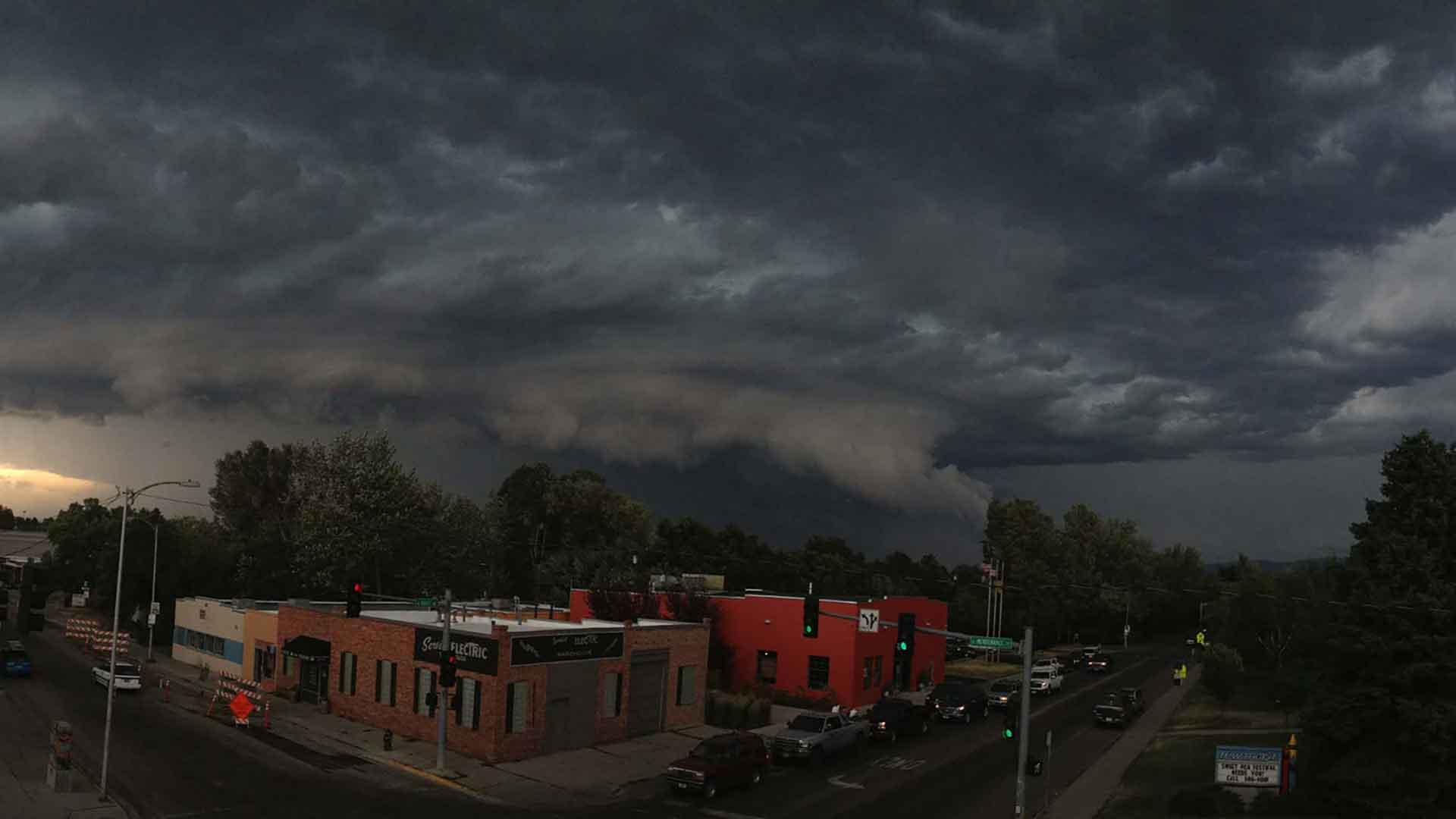
At approximately 300pm on Saturday August 28, 2010 a severe thunderstorm moved into the southwestern portions of West Yellowstone. The storm moved through the town over the next 5 to 10 minutes producing localized structural damage and downed or snapped trees across the town in a southwest to northeast line through the town due to straight-line winds, possibly associated with a microburst. The path of the damage was close to 1 mile in length, and extended from the far southwest corner of the town to near the USFS station on the northeast edge of town. Wind speeds were estimated near 85 mph.

Details of the Survey

The survey team consisted of Michael Mercer, Meteorologist in Charge; and Benjamin Schott, Warning Coordination Meteorologist. The survey team was dispatched to West Yellowstone after receiving reports of significant structural damage in the town, and many trees down, snapped and uprooted shortly after the event. The survey team reached the town the following morning at 9am and met with Robert Glenn, West Yellowstone Public Works to survey the damage together. The team started just southwest of town and noticed a scattering of trees down, approximately 10 trees. The survey team worked northeast across the town investigating structural damage at a few private residences where the corners of roofs were peeled off, each had significant eaves which may have helped the wind provide greater forcing on the roof, and a church had its brick/stone covered entry displaced from the wind gusts. A few trees were down near the church as well. The survey team then stopped in the city park where many trees were downed, and a few snapped, a portable tarp-covered stage had been pushed off its jacks and the 2 inch diameter supports bent. Next to the park is where the majority of the structural damage occurred with three hotels receiving significant damage to their roofs. The Best Western -Weston had most of the roof blown back behind the building, with some of the metal roof material in trees 50 to 100 feet behind the hotel. The roof had large eaves and that may have contributed to the loss of the structure, no other damage was noticed and as a note of interest the many flower pots still hung neatly all along the front of the hotel that was open to the strong winds. The debris from the roof did considerable damage to a few automobiles behind the hotel. The last of the damage was spotted just north of the hotel with some scattered trees down between the hotel and the USFS station.

The damage was consistent with straight-line wind damage with the trees downed in the same direction throughout the town. All debris from the hotels was sent in the same relative direction as the downed trees. Witnesses, nearly 20, reported funnel clouds but no one ever witnessed seeing the funnel cloud reaching the ground. A video taken as the storm entered town did show some elevated rotation, yet not a tornado. Aerial photos were taken through the Civil Air Patrol (photos below), in coordination with Gallatin County DES, and showed the scattered and localized nature of the damage in West Yellowstone. A big thanks to both West Yellowstone Public Works, and Gallatin County DES for a well coordinated effort in gathering information and support for the survey.


Click here for PDF Version.

Bozeman Water Restrictions Removed

AUGUST 2, 2010 8:20 AM

Due to a major water main break on July 31, 2010, the City of Bozeman Director of Public Services issued an immediate prohibition on the use of outside water, which included lawn irrigation and car washing (from a hose). This restriction was needed to ensure adequate water for domestic, inside use.

The water restriction emergency has been resolved, and the restriction is now lifted. No water restrictions are currently in effect.  The City of Bozeman offers its thanks to the citizens who abided with the restriction.

Media questions can be directed to Debbie Arkell, Director of Public Services, 581-0091.

( >> View Older Postings)